


Why Early Engagement With Manufacturers Pays on Complex Heat Pump Retrofit Projects

Why early engagement with manufacturers pays on complex heat pump retrofit projects
Q: Why are heat pump retrofits such an important issue for consultants and contractors?
Shane Suter: Heat pumps are one of the favoured technologies for accelerating the UK’s net zero journey, not only in new commercial buildings but across the existing non-domestic building stock, where the greatest retrofit challenge lies. For consultants, specifiers and contractors working in commercial, public sector and larger housing development environments, the opportunity is significant, but so too is the technical complexity.
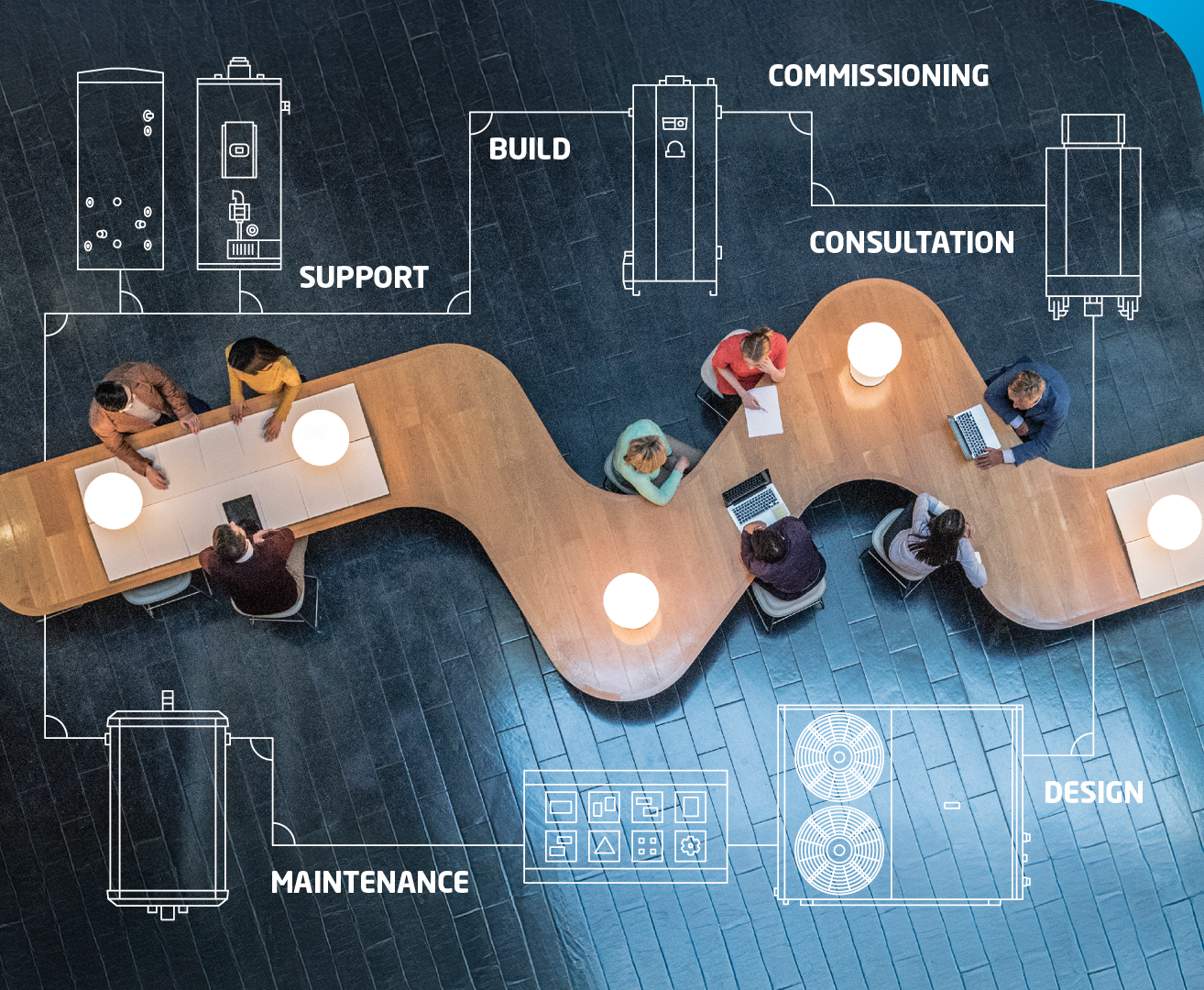
The reality is that a successful retrofit is rarely achieved by simply replacing a boiler with a heat pump. We need to understand the building, its heat demand, the distribution system, the electrical infrastructure and the available space from the outset. That is why early engagement across the project team, including dialogue with manufacturers and commercial HVAC solutions providers, has become so important. Manufacturers no longer simply ship boxes; they can support the project from initial feasibility and system selection through design, specialist seasonal commissioning, maintenance and aftercare.
Q: Where should the project team start?
Shane Suter: Start with the building’s actual requirements, rather than a preferred piece of equipment. A major advantage of early manufacturer involvement is that it encourages the project team to begin with the building’s actual requirements, rather
than a preferred piece of equipment. This is particularly important in retrofit, where no two buildings are exactly alike.
Older buildings may be served by existing heating systems designed around high-temperature boilers, older radiators and legacy pipework that have been refurbished over time. In buildings like these, a manufacturer-led feasibility survey can help identify whether a heat pump is viable and the level of upgrade that may be needed. The process typically includes assessing heat losses, emitter sizes, plantroom or external space, access routes, noise considerations, controls strategy and hydraulic integration. This stage is invaluable to ensure that heat pumps, which perform best at lower flow temperatures than traditional boiler systems, achieve their maximum efficiency.
An added benefit of the survey process is that it enables specifiers, heating engineers and contractors to plan the works and make informed decisions early, whether that means applying for planning permission, upgrading emitters, improving controls, phasing works, or retaining boilers for peak load support in a hybrid heat pump system. All of which helps de-risk the process.
Q: How can manufacturers support consultants at the design stage?
Shane Suter: Early manufacturer engagement supports better design because heat pump retrofits usually raise a wider set of questions than a like-for-like boiler replacement. These include the flow temperatures the building can realistically operate at, whether buffer storage is required and whether a hybrid heating system would be more appropriate.
At Baxi, for example, we can support consultants and specifiers with pre-sales technical design services, engineering a series of tailored design options. We can then test those options using technical product data, system knowledge and design simulation tools.
A full electrification strategy may offer the greatest carbon reduction, for example, but may require fabric upgrades or increased electrical capacity. A hybrid system may not
achieve full decarbonisation, but can provide a practical stepping stone where budgets, space or operational risk make a full transition harder to achieve immediately.
This ‘optioneering’ stage enables a more evidence-based conversation with the client to help arrive at the best solution for the project.
Q: What electrical and infrastructure constraints need to be addressed early?
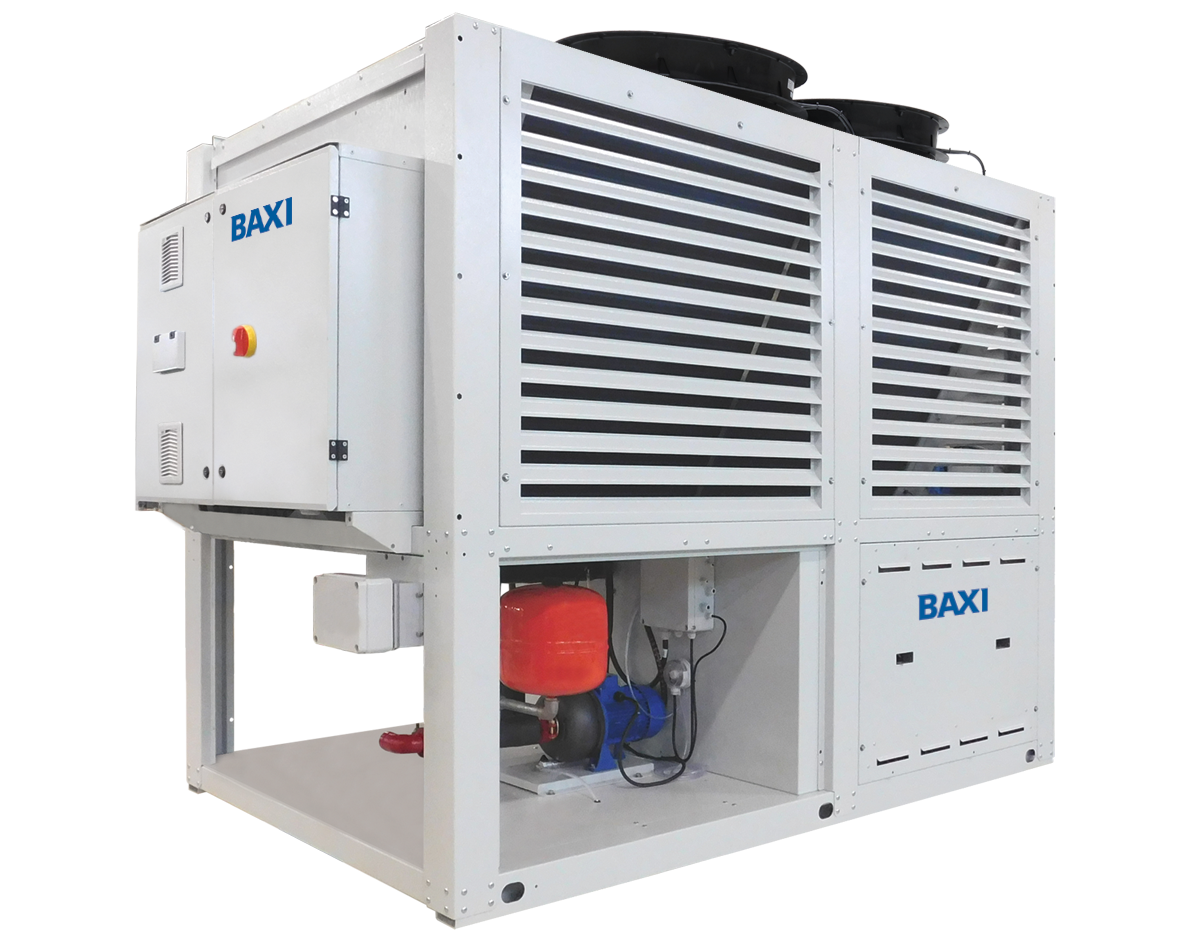
Shane Suter: Electrical capacity is a key area where early discussions with manufacturers can keep a project running smoothly and on track. The team needs to determine the infrastructure required to support the new ASHPs, whether an additional supply is necessary, the power supply type, overcurrent and fault protection requirements, and opportunities for smart-grid or tariff integration. Any supply upgrade can have a major impact on programme and cost, so it is much better to identify it early.
Q: What are the main benefits for contractors?
Shane Suter: For contractors, early manufacturer engagement can improve commercial certainty, reduce delivery risk and support training.
Manufacturers can provide the clear input needed at the tender stage, from equipment guidance, technical documentation and schematics to commissioning requirements and training support. This information is also useful for installation quality and the handover process.
Importantly, manufacturers are also a useful resource to provide the necessary product training, continuing professional development and practical technical advice to keep heating professionals updated as heat pump techniques and technologies evolve.
Q: Why does manufacturer involvement need to continue beyond installation?
Shane Suter: Correct commissioning, seasonal recommissioning, appropriate control settings and user understanding are all essential if the heat pump system is to perform optimally after installation.
Manufacturer involvement with training the building operator, facilities or estates manager on operating the new system is therefore vital to reduce the risk of poor performance being wrongly attributed to the technology itself.
At Baxi, we can also offer tailored maintenance plans alongside full aftercare support, including service and spares. This helps heating engineers access the genuine parts, expertise and support needed to keep customers’ systems running reliably throughout their lifetime.
Q: How does early engagement help clients develop a realistic decarbonisation pathway?
Shane Suter: It makes the decarbonisation journey more transparent for organisations that want to reduce emissions but may not fully understand what a heat pump retrofit involves. Experienced manufacturers can break down the project’s complexities and help the client make the right decision for the specific needs of the building.
Additionally, it can help them prepare for the work ahead. For example, a heat pump may be technically viable, but the best outcome might depend on complementary measures such as improved insulation, weather compensation, system balancing or phased plant replacement. In some cases, therefore, a staged pathway can be more realistic than a single major intervention. For public sector estates, schools, healthcare premises and commercial buildings with limited shutdown windows, that knowledge and ability to forward plan can be crucial.
Q: What does a successful partnership approach look like in practice?
Shane Suter: Heat pump retrofit is fundamentally collaborative. The best solutions are developed when the heating engineer, consultant, contractor, manufacturer and client work together from the outset. Each brings a different perspective: the contractor understands site practicalities, the consultant understands design intent, the client understands operational needs, and the manufacturer understands system capability.
When these conversations happen early, the result is a better-informed project. Risks can be avoided, budgets are based on realistic assumptions, system choices are matched to building requirements, and training and commissioning are built into the programme.
Most important of all, this makes it more likely that the client will receive the best solution for their building, one that performs as intended and delivers the expected carbon, comfort and efficiency benefits.
Visit the Baxi Stand C230 at elementalLONDON to discuss with our expert team how we can support your next project, or find more information on our website at baxi.co.uk/commercial.