)
)
)
Onetrace’s Greg McClelland on Connecting People, Work and Proof of Compliance

Who are you, and what does your company do?
I'm Greg McClelland, co-founder of Onetrace—software built for subcontractors. We started out focused on compliance and traceability in passive fire protection, because it's one of the most audit-heavy trades in construction. But we quickly found the same problem exists everywhere: subcontractors losing hours to admin that has nothing to do with their trade.
Onetrace brings their work, the workforce and the evidence together in one system, so teams can prove what they've done without a last-minute scramble, and managers can see what's happening across every site without chasing anyone.
What are you showcasing at London Build & elementalLONDON?
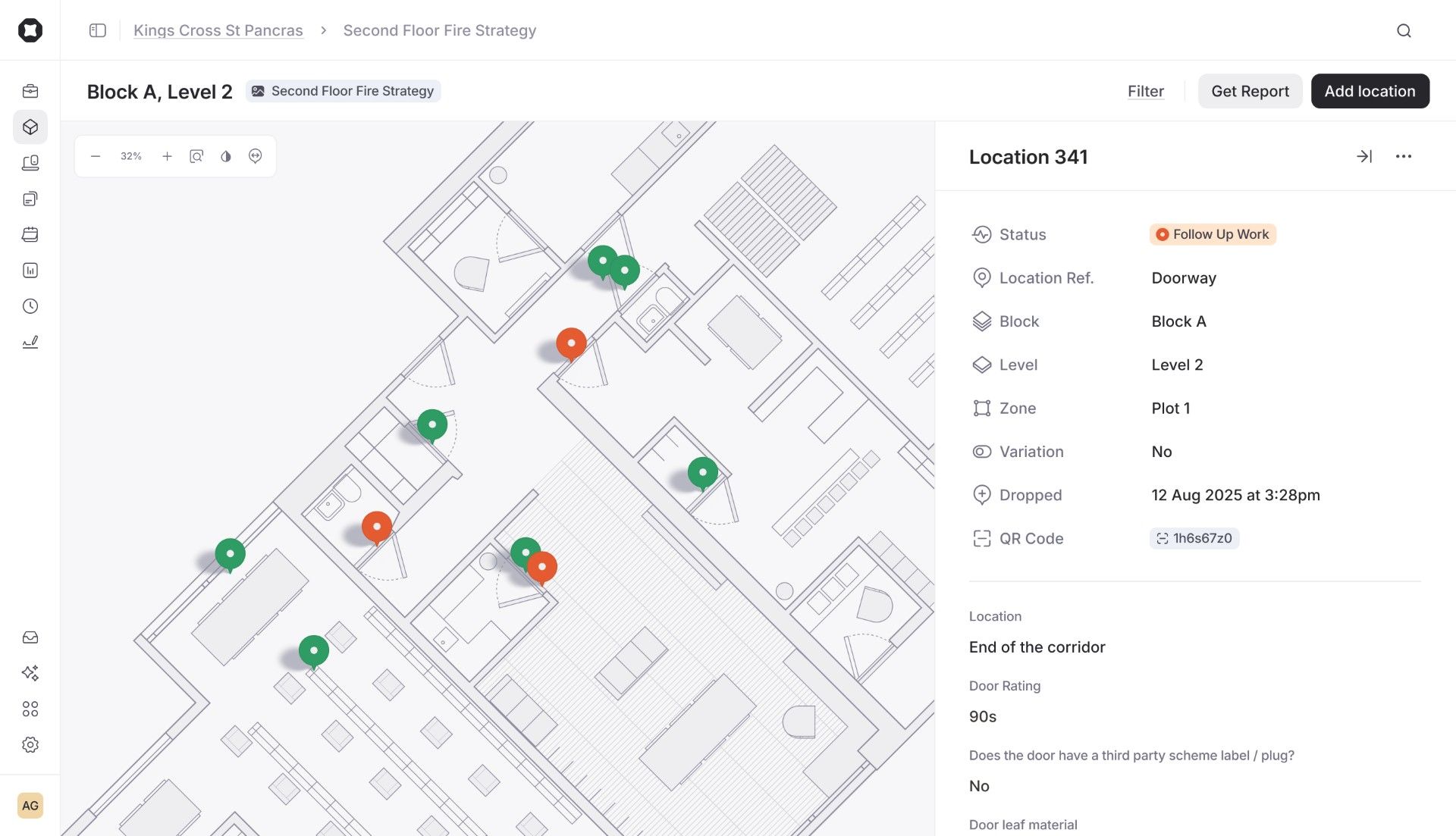
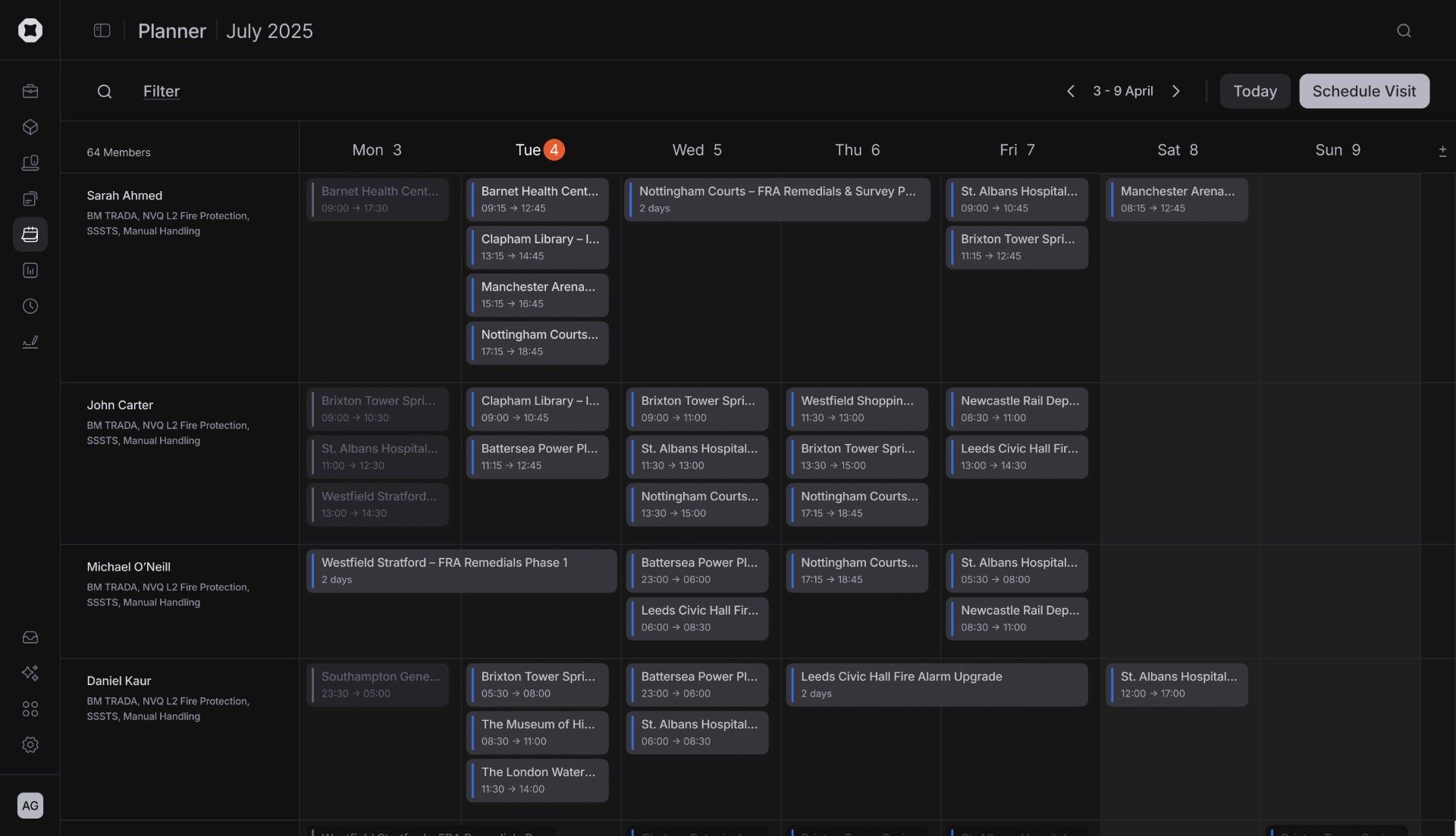
We're bringing the full platform rather than a single feature. Traceability covers evidence, forms, drawings and approvals—proving compliant work as it happens. Workforce covers planning, timesheets and signed docs—making sure the right people are in the right place, accounted for. The point we want people to leave the stand understanding is that these aren't two products bolted together. They're one system, so the person doing the work and the proof that it was done to standard live in the same place.
What industry problem does it solve?
Subcontractors are being asked to prove more, faster, by more people—main contractors, building control, insurers—and so many are still doing it with WhatsApp photos, paper forms, and someone rebuilding a report the night before a deadline. That's not really a paperwork problem, it's a business risk: if you can't produce clean evidence when it's asked for, you're exposed, and every hour spent reconstructing what happened on site last month is an hour not spent on the next job. Onetrace closes that gap by capturing the evidence as the work happens, not after it.
Who would benefit most from your solution?
Anyone running compliance-heavy site work with more than a handful of people feels this most acutely—passive fire protection, fire doors, drylining, M&E, electrical. It applies whether you're a ten-person outfit where the owner is still doing half the admin themselves, or a multi-trade contractor running thirty projects at once and losing visibility of who's doing what, where. The common thread is growth: the busier a business gets, the more this admin burden compounds, and that's exactly when it needs to stop being manual.
What makes it stand out?
Most tools in this space are either broad project management platforms retrofitted for compliance, or basic photo-logging apps. We built Onetrace the other way round—audit-grade traceability first, because that's the hardest problem to get right, with workforce management built around it, because the person doing the work and the proof of that work are the same conversation, not two separate ones. That combination, plus the fact it's built for how site teams actually work rather than how head office wants to see a dashboard, is what gets it adopted rather than abandoned after a fortnight.
Why is London Build & elementalLONDON an important event for your company?
We've exhibited before, and the feedback taught us something useful: even when people hadn't heard of Onetrace, on getting a demo the reaction was consistently that this felt built for people like them, not for the office. That's exactly the gap we want to keep closing. Events like this put us in a room with the people who actually run this work, not just the people who buy software for them, and that's worth its weight in gold.
Will you be launching any new products or running live demonstrations at your stand?
No new launch this year—but loads of enhancements and improvements. We’re here to show what's already working for the trades in the room. Our team will be doing live walkthroughs of the whole platform, so visitors can see their own trade's evidence and reporting challenges solved in front of them rather than take our word for it.
What do you see as the most pressing challenge facing the industry today, and what needs to change to address it?
The industry's readiness gap. Government research published in 2025 found construction has one of the lowest rates of technology adoption of any UK sector—47%, against a cross-sector average of 56%—and the lowest rate of technology diffusion of any sector surveyed. Meanwhile the compliance bar keeps rising: golden thread requirements under the Building Safety Act apply to every trade on a higher-risk building, not just fire safety. What needs to change isn't more regulation, it's making that bar realistic for a fifteen-person subcontractor to meet without hiring an admin team. There's a live debate about AI's place here too—used well, it can help verify installs or extract data faster, but the decision that work is safe and compliant has to stay a human judgement. Evidence and accountability can't be automated away.
What’s your favourite thing about working in this industry?
There are probably two things for me.
The first is the people. Construction is full of people who just find a way to get things done. Things don’t always go to plan on site, so people have to think on their feet, solve problems quickly and keep things moving. I’ve always liked that about the industry.
The second is how direct people are. If something doesn’t work, they’ll tell you. There’s not much sugar-coating, which I actually really like. Especially being in software, that feedback is invaluable because it keeps us close to our customers and makes sure we’re building things that genuinely solve problems for them.
I also love the fact that it’s an industry that is changing. Technology is becoming a much bigger part of construction, and being able to play a part in that and hopefully make people’s working lives a little easier is something I really enjoy.
Is there a recent project or case study you would like to highlight?
We recently spent a day in the office and on multiple sites with Frank Rogers Building Contractors in Liverpool. We filmed what a normal working day looks like when evidence is built into the job rather than reconstructed afterwards. Jay Sefton, their Head of Fire Door Compliance, puts it well: Onetrace gives him consistency—the same process and delivery wherever they are and whatever they’re working on—and visibility—because he always knows where everyone is, and the status on every project.
-Greg McClelland, Co-Founder - Onetrace
Visit C195 at London Build to meet the team.